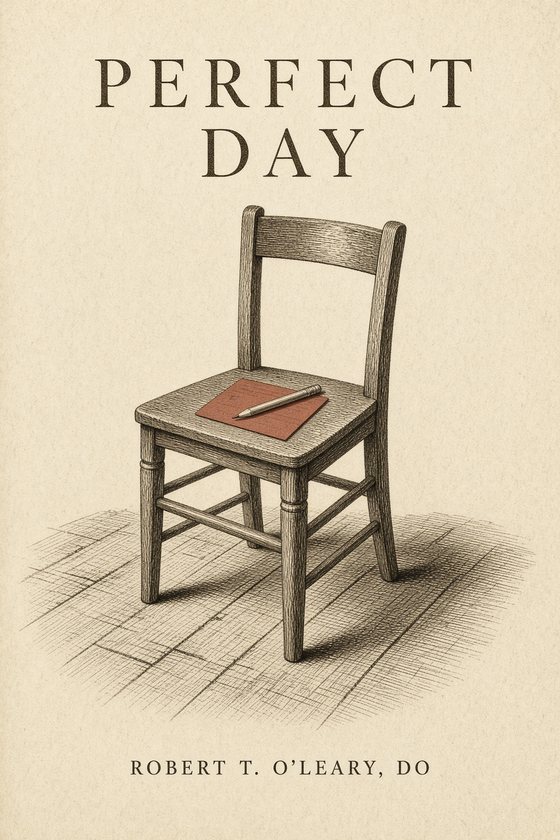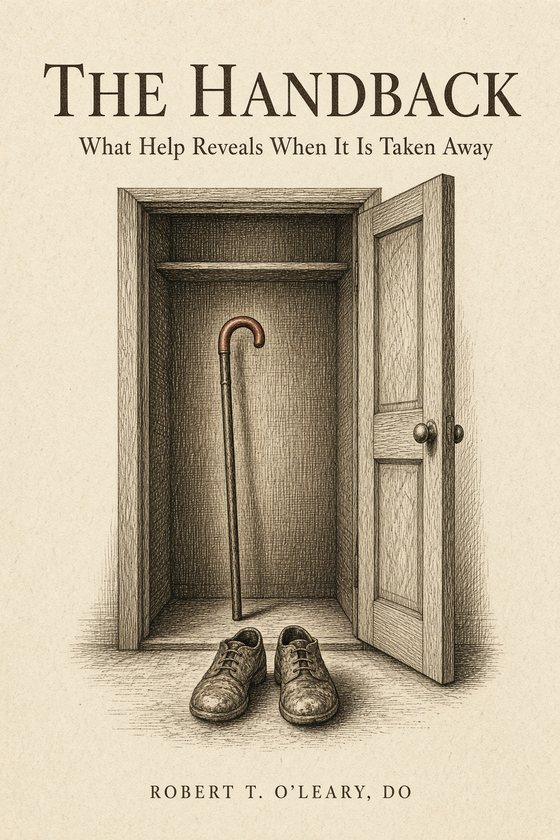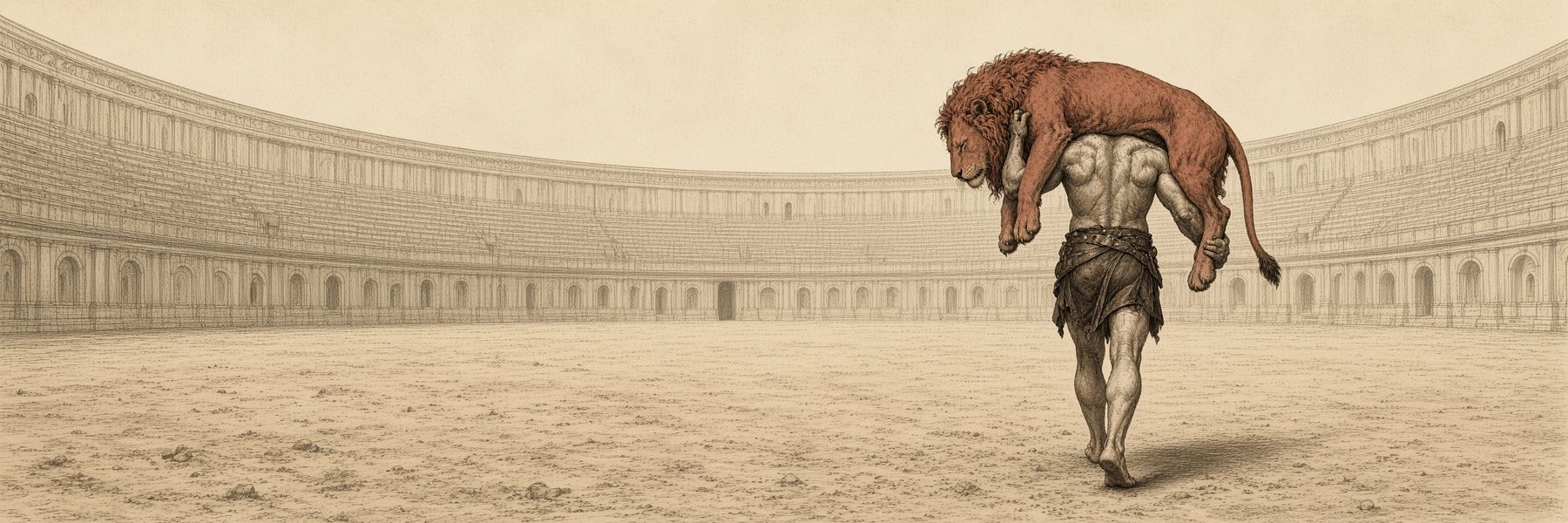
A man walks out of an empty arena carrying a lion across his shoulders; pen and ink on cream paper, the lion in rust.

An author-owned imprintThe Asking Press

Books and papers on what the body has left to spend.

The books

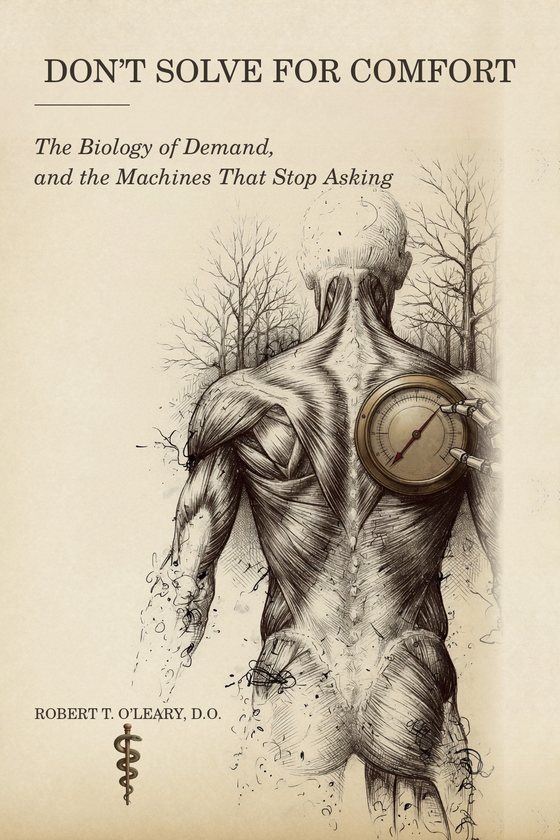
Cover of Don't Solve for Comfort: a pen-and-ink figure seen from behind, with a pressure gauge set into the back.

Don’t Solve for Comfort

The Biology of Demand, and the Machines That Stop Asking
Nonfiction · Manuscript complete
Seeking representation

Comfort is a design goal that, met completely, removes the demand the body was built to answer.

The argument underneath all of it. Demand is the input the body is regulated against; take it away and capacity falls on a delay long enough to escape notice. For most of human history the load was compulsory. Now the machines are the first force that sets it on purpose, and they are being built to ask less. A clinical book about what we are choosing when we choose ease.

Full manuscript available on request.

Cover of Capacity Worth Keeping: a wheelchair and a wheelbarrow of books and boots in a lit doorway.

Capacity Worth Keeping

Retirement, Kindness, and the Last Day
Nonfiction · Twenty-three chapters
Manuscript complete

Nobody told you that the job was the exercise.

For thirty or forty years your day charged you for everything — the stairs, the standing, the carrying, the deadline you could not put down. None of it was recorded anywhere, none of it felt like training, and all of it was holding you up. Then it stopped, on a Friday, and they gave you a cake.

What follows is not old age arriving on schedule. It is a withdrawal, and it is invisible for the same reason the deposits were: nothing was ever counting. The help arrives to meet it, and the help is real — the grab bar, the delivery, the daughter who flies in and empties the sink. Kindness is not the opposite of this problem. Kindness is how it happens.

A physiatrist of thirty-two years, writing about the patients who argued back, makes the case for deciding in advance which load is worth keeping — while it is still your decision to make.

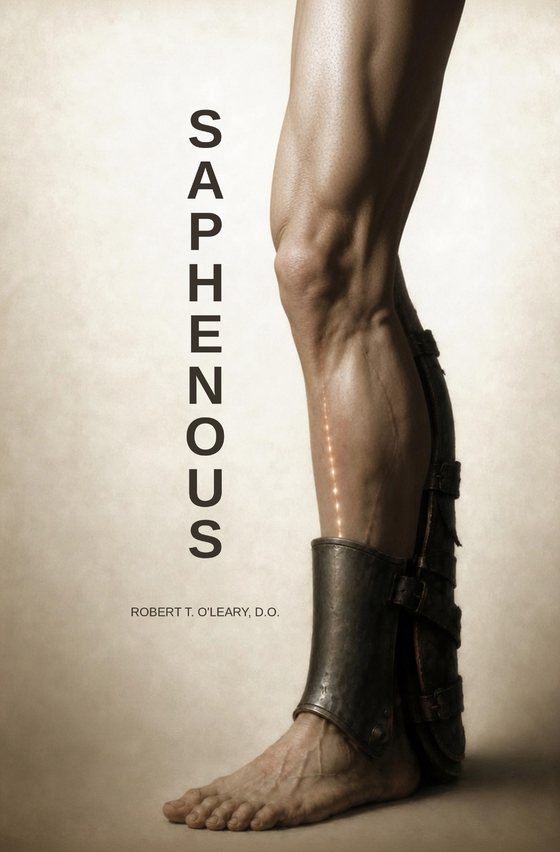
Cover of The Saphenous Choice: a bare lower leg in a fitted brace, the nerve traced in a thin rust line.

The Saphenous Choice

Fiction · Novella
Fourteen chapters, eleven plates
Complete

A nerve that can only listen.

The saphenous nerve runs down the inside of the shin and carries feeling in; it cannot move a muscle. Roman, a physiatrist, runs a neural link into his own saphenous and spends three years learning to read it. His colleague Rex takes the motor link, the one that acts for you, for the opposite reason, and is hollowed out by it. Naomi, disabled from birth, makes the strongest case against Roman’s whole idea, and wins it.

What is spent, endures.

Also on the shelf

Representation inquiries for Don’t Solve for Comfort: rob@theaskingpress.com. Full manuscript available on request.
The research

O’Leary RT. The Preservation of Functional Reserve: A Control Systems Framework for Human Aging. Life. 2026;16(9):1457. Published doi:10.3390/life16091457

O’Leary RT. Is Immune Homeostatic Competence a Distinct Capacity? A Falsifiable Test for a Sixth Determinant of Functional Reserve. Zenodo, 2026. Preprint. doi:10.5281/zenodo.22728017

O’Leary RT. New Horizons in Reserve Variability: Point, Slope, and the Third Axis of Serial Functional Measurement. Preprints.org, 2026. Preprint. doi:10.20944/preprints202609.0581.v1

O’Leary RT. The Governing Minimum: Multi-Domain Rate Asymmetry Under Challenge as Functional Reserve. Preprints.org, 2026. Preprint. doi:10.20944/preprints202609.0084.v2

O’Leary RT. Unrecorded Load Exceeds the Reference Change Value: Condition of Measurement in GDF15 Research. Preprints.org, 2026. Preprint. doi:10.20944/preprints202608.0304.v1

O’Leary RT. The Gain–Loss Ratio: Defining a Missing Quantity in Human Capacity Dynamics. SportRxiv, 2026. Preprint. doi:10.51224/SportRxiv.1029

Essays

Short pieces from the clinic and the household, where the argument of the books meets a Tuesday. New essays post on Substack; subscribing is free.

The author

Robert T. O'Leary, DO

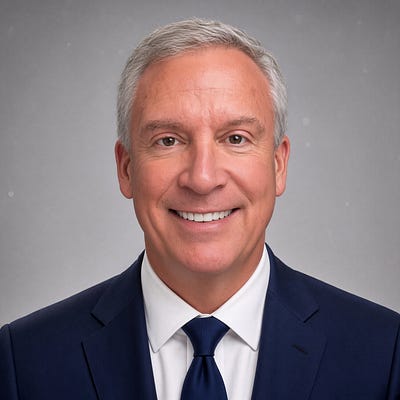
Robert T. O’Leary, DO, is a physiatrist, double board-certified in physical medicine and rehabilitation and in pain medicine. He has practiced for more than thirty-two years and is a clinical associate professor at the Orlando College of Osteopathic Medicine. His work concerns functional reserve: what the body can still be asked to do.

Contact

rob@theaskingpress.com